
Owning
the build.
This includes a diagnostic, a 90-day plan, a routing spec, and my take on where AI can actually help, all built around the role I'd be stepping into.
The seat I'd be stepping into
Ammortal has a strong brand, Enterprise HubSpot, and a lot of room to grow. The work is not just cleanup. It is about activating more of what they already own, while keeping the system clean as the team scales.
- Verticals
- Sports · Hospitality · Clinics · HNW
- Team shape
- Small, mobile, vertically aligned
- HubSpot tier
- Sales · Service · Marketing Enterprise
- Today
- A fraction of capability switched on
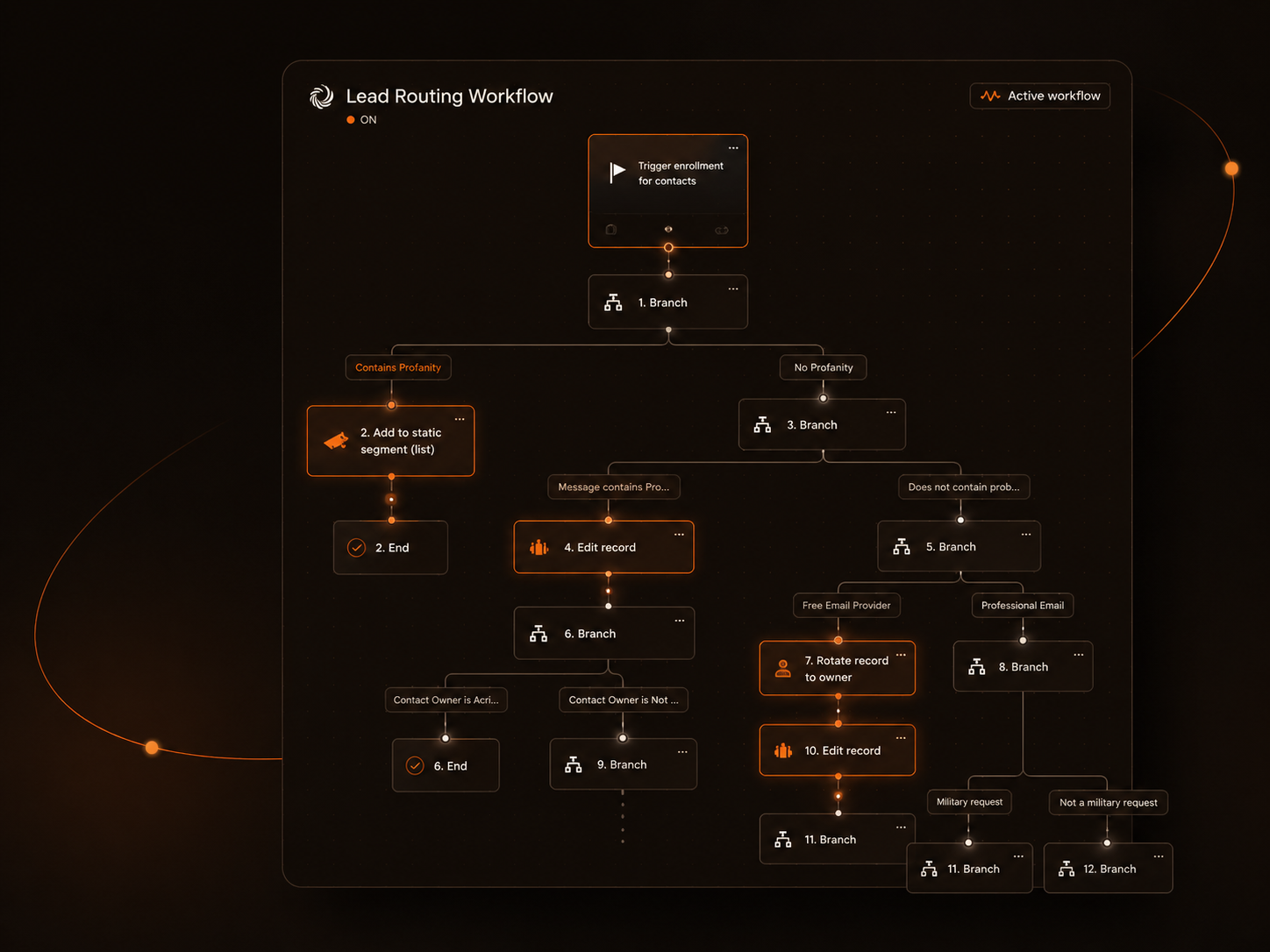
- 01Lead routing & owner assignment partly manual
- 02Vertical not always captured at first touch
- 03No attribution across long, multi-touch cycle
- 04Reporting under-leveraged
- 05Service Hub barely switched on
- 06Ongoing data-quality work to scale
"We care less about a polished artifact and more about how you think, prioritize, and take ownership of a system with a lot of runway still ahead of it."
What I'd tackle first
Four things, in this order. The logic is dependency-driven: anything that automates on top of a loose data model is technical debt the day it ships.
- 01
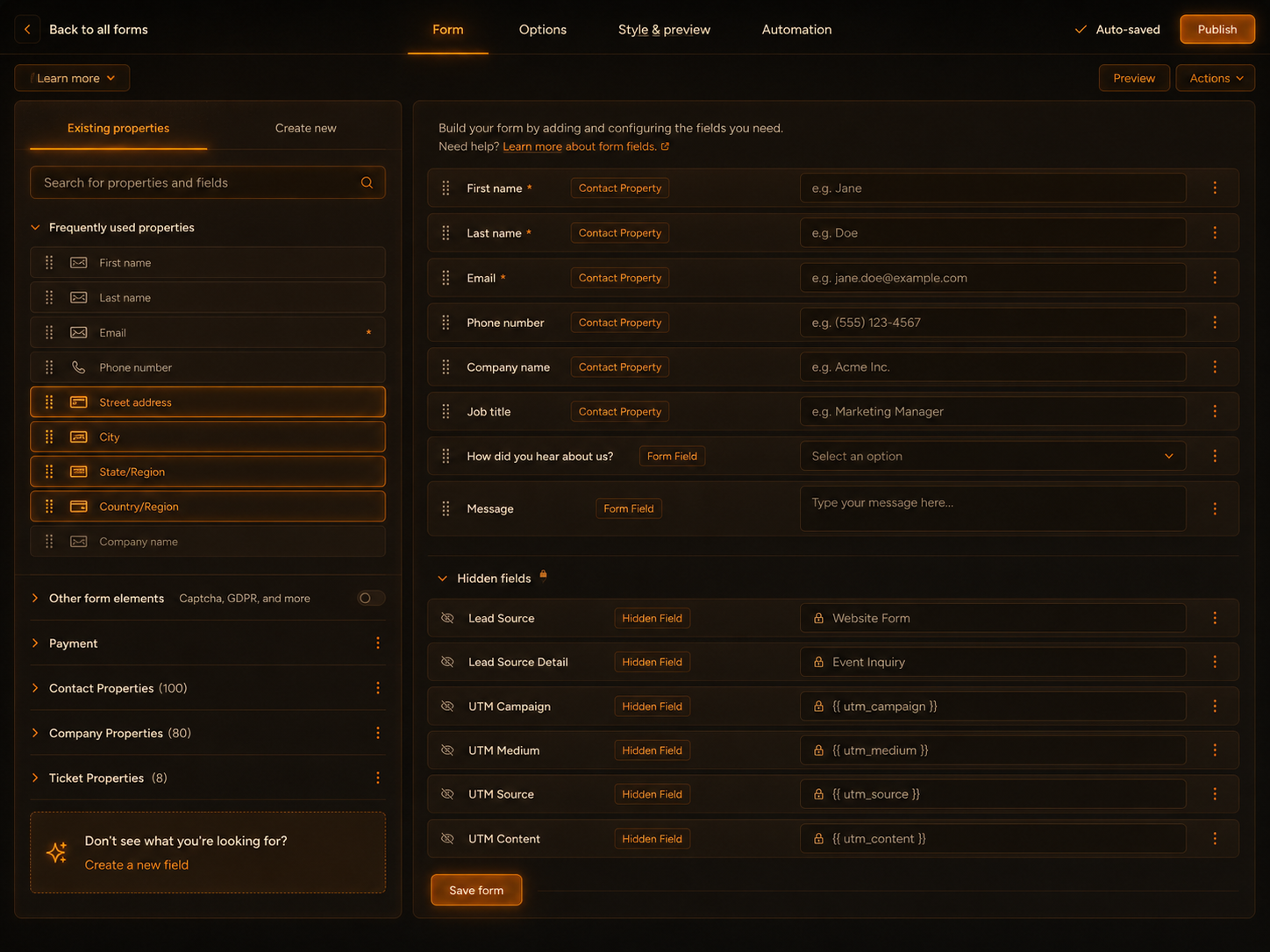
Data model + vertical taxonomy
Why → This is the piece everything else depends on. Routing, reporting, and attribution only work if the taxonomy is clear. Otherwise, every workflow just builds on messy data.
Trade-off · It is not glamorous, and it may slow the first 30 days, but it clears the path for everything that comes next.
DependencyFoundation for #2, #3, #4 - 02
Lead routing + owner assignment
Why → Reps are vertical-aligned and mobile. Manual routing is the most visible daily friction and the one that compounds with volume.
Trade-off · Requires #1 first. We accept a 30-day delay to ship something that won't need rebuilding.
DependencyNeeds vertical taxonomy - 03
Lifecycle + pipeline governance
Why → Stage definitions decide what 'qualified' means. Without them, reporting is opinion and attribution is impossible.
Trade-off · Trade-off: this needs input from both Sales and Marketing before it is locked, so the taxonomy reflects how the team actually works.
DependencyParallel with #2 - 04
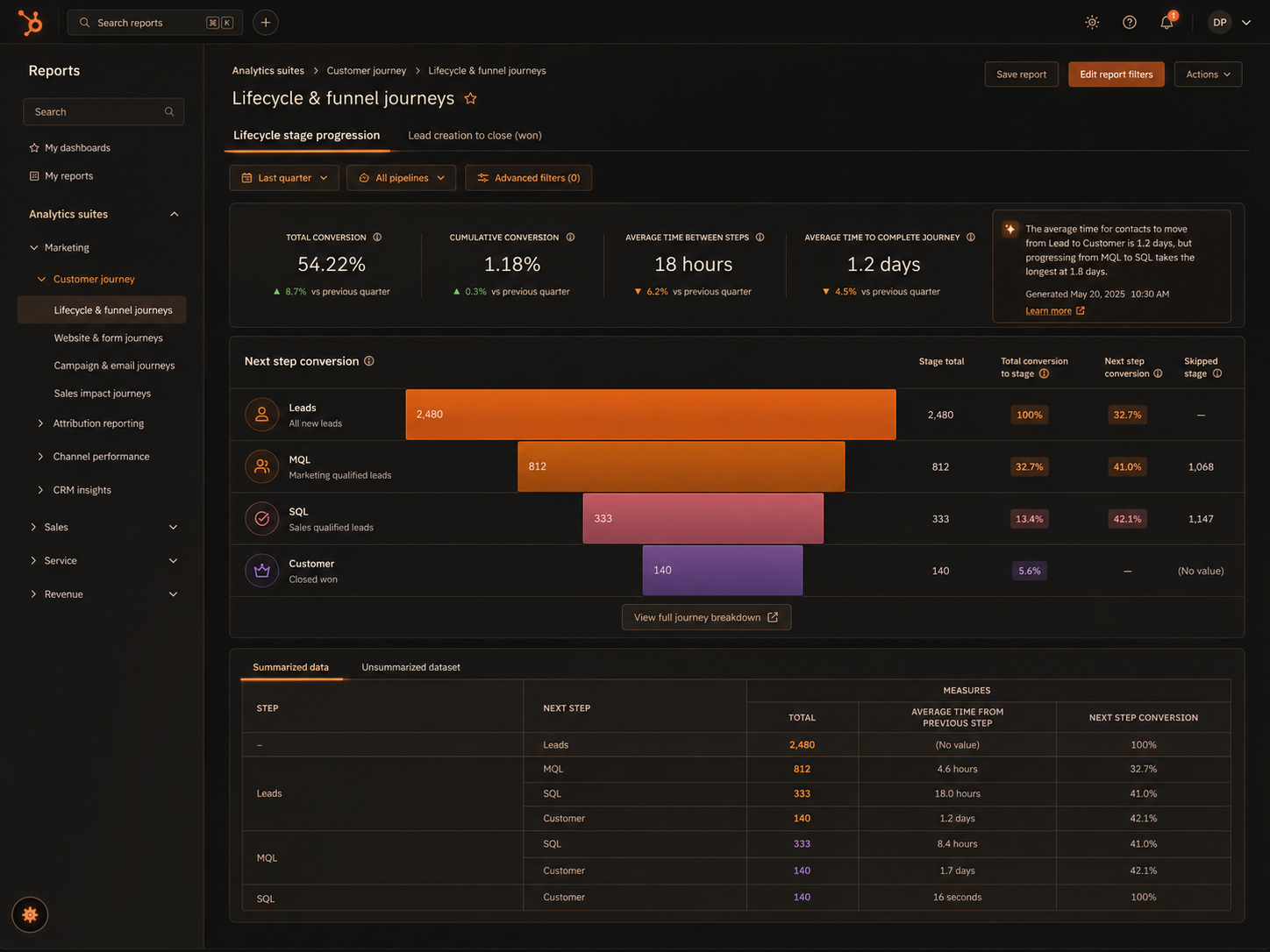
Reporting foundation
Why → Dashboards should answer operational questions: where leads are stuck, which vertical is converting, where SLAs slip.
Trade-off · Trade-off: I would intentionally push this to day 60+. Reporting on bad data can create more confusion than not having the report yet.
DependencyNeeds #1, #2, #3
Sequence, dependencies, signals
What ships in each window, what blocks what, and the leading indicators I'd watch to know it's working.
Single source of truth for vertical, owner, source. Clean baseline.
≥ 70% of new leads auto-routed with reason stamped. Review queue cleared daily.
Sales can answer 'why this lead, why this stage' from HubSpot, not a spreadsheet.
Automating before the model is trusted
Automation amplifies whatever's already in HubSpot.
If the foundation isn't clear, automation can make the mess bigger instead of solving it, and it's much harder to fix once workflows are already running.
The cheapest insurance against this is earning trust in the data model first, then automating around it.
- 01Lock taxonomy before any workflow
- 02Ship routing in phases (high → medium → low confidence)
- 03Stamp routing reason on every record
- 04Keep a manual review queue with daily clear
- 05Routing exceptions dashboard from day one
- 06Weekly sales sync to review feedback before scaling the process
- 07Document operating playbook as we build
Vertical-first, confidence-aware routing
Because vertical is not always captured at first touch, I'd structure routing around three signal types: declared, inferred, and unknown. Each one would follow a clear routing path and be measured separately.
- vertical · enum (declared)
- vertical_inferred · enum
- vertical_confidence · 0-1
- vertical_source · enum
- owner_id · ref(User)
- routing_status · enum
- routing_reason · text
- vertical · enum
- industry_raw · text
- domain_signals · json
- size_band · enum
- primary_owner · ref(User)
- vertical · enum (inherited)
- pipeline · enum
- first_touch_campaign · ref
- last_touch_campaign · ref
- owner_id · ref(User)
- contact_id · ref
- decision · enum (auto/review/manual)
- confidence · 0-1
- rule_fired · text
- sla_started_at · datetime
- outcome · enum
- Multiple vertical signals conflict→ Highest-confidence source wins · stamp both · review flag
- Contact already owned→ Keep the current owner, add the new intent, and notify them
- Company has active deal→ Inherit deal owner · skip routing rule
- Personal-email lead→ Lower confidence by 0.2 · route via inferred fields only
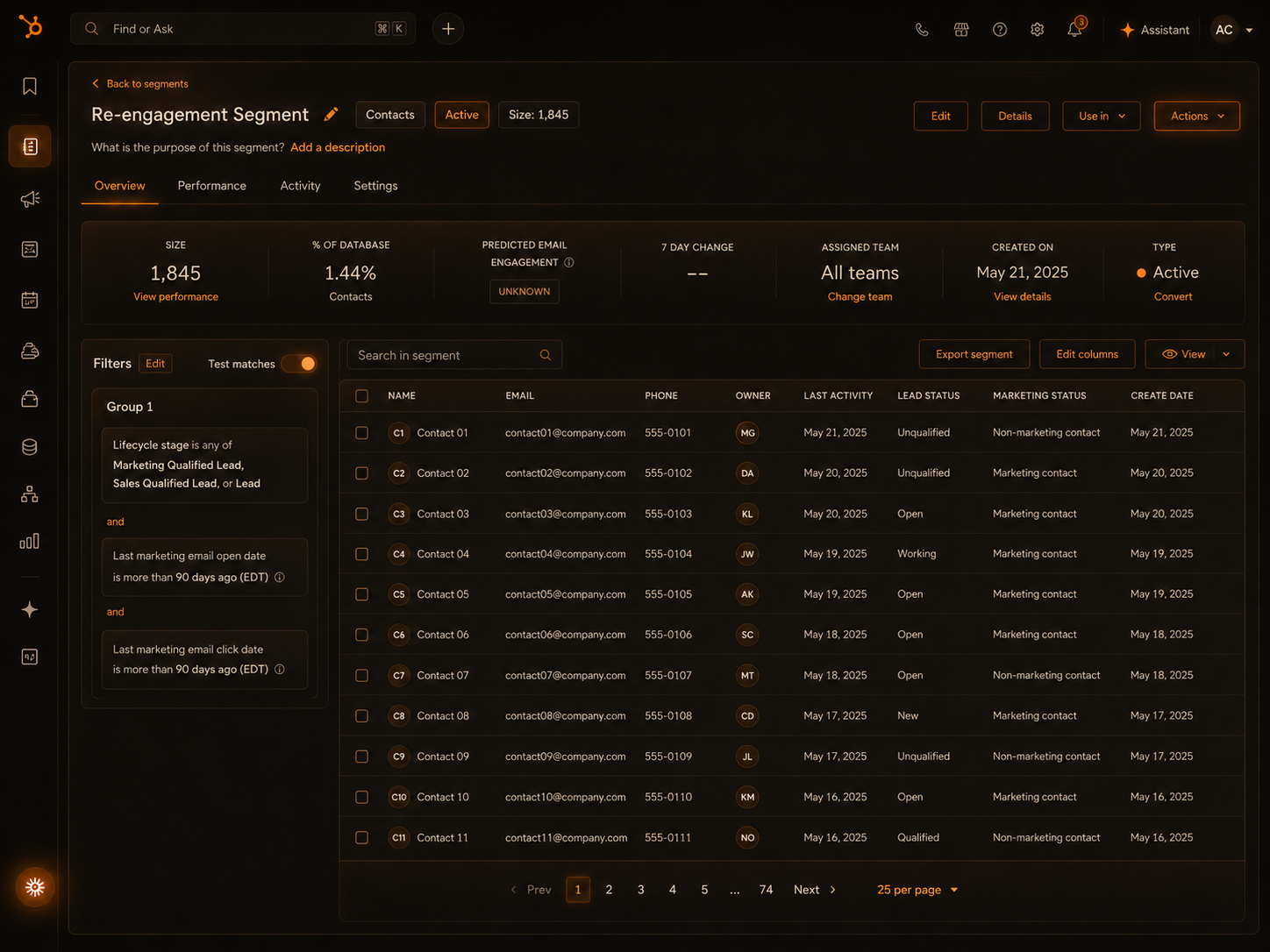
- Event lead, no buying intent→ Lifecycle = subscriber · skip sales routing
- Partner / investor / press→ Tag · exit routing · route to ops inbox
- Rep OOO / coverage change→ Coverage table overrides owner · stamp reason
- Manual owner override→ Always wins · log as override · don't retrigger
Where AI earns its keep
AI is leverage on top of a trusted model. I'd point it at the gap the brief calls out (vertical at first touch) and at the repetitive work that drains rep time. I'd hold off where AI would scale assumptions.
- 01
Vertical inference
If the vertical is not declared, I'd use signals like company, domain, job title, and campaign source to fill the gap.
- 02
Data quality flags
Missing fields, duplicates, and stale records would be surfaced in a daily ops queue for review.
- 03
Call / email summarization
Activity records carry context, not transcripts. Faster handoffs.
- 04
Routing reason explanation
Every routed lead would include a clear routing reason, so the logic is easy to review.
- 05
Next-best-action prompts
Suggested follow-ups based on stage + activity gap. Rep stays in control.
- 06
Service Hub triage
Categorize + route inbound tickets once support process is defined.
- 01
Fully autonomous reassignment
This is too risky to fully automate at first. I'd keep a human in the loop until the exception rate is low enough to trust the process.
- 02
AI changing lifecycle stages
Stage = sales commitment. Owned by rules + people, not models.
- 03
AI-led attribution
I'd hold off until touchpoints and campaigns are structured. Otherwise, it is just messy data producing confident but unreliable answers.
- 04
Customer-facing Service AI
Not until the support process and tone of voice are defined.
- 05
Anything we can't audit
If we can't explain why it fired, it doesn't ship.
HubSpot isn't just where information lives. It's where the sales process actually happens.
In this role, my focus would be making HubSpot a system the team can trust, manage, and scale, without losing sight of the quick wins that make a difference early on.